
One of the findings from the data about academic programs across the US point the need for academic programs to do a better job of program design. So one of the latter chapters of my book manuscript about #TechComm #TPC academic programs is bring learning experience design centrally into TPC as a framework for program and course design. One one hand, I was surprised that the field hadn’t taken up this move, but on the other hand, the academic field hasn’t really embraced any theories of program design.
So bring curriculum scholar Ted Aoki into conversation with Jesse James Garrett elements of user experience and the principles of learning experience design (LXD), I create a framework for use within academic programs. While my focus is #TechComm programs, the approach can be used in most any curriculum design.
Some key excerpts from the chapter:
LXD as a Relational Framework
LXD as a curriculum development framework is focused on the relational nature of learning and emphasizes the relationships between and among the main components of the learning experience. What I refer to as the relational nature harkens back to Aoki (2005) and his emphasis on curricular landscape: “In our curricular landscape, it is a space that knows planned curriculum and live(d) curriculum, a space of generative interplay between planned curriculum and live(d) curriculum. It is a site wherein the interplay is the creative production of newness, where newness can come into being. It is an inspirited site of being and becoming” (p. 420). The relational nature of LXD enables the site of learning and becoming because it accounts for different aspects of the relationships in learning or different aspect of the curricular landscape, as seen in Figure 2.
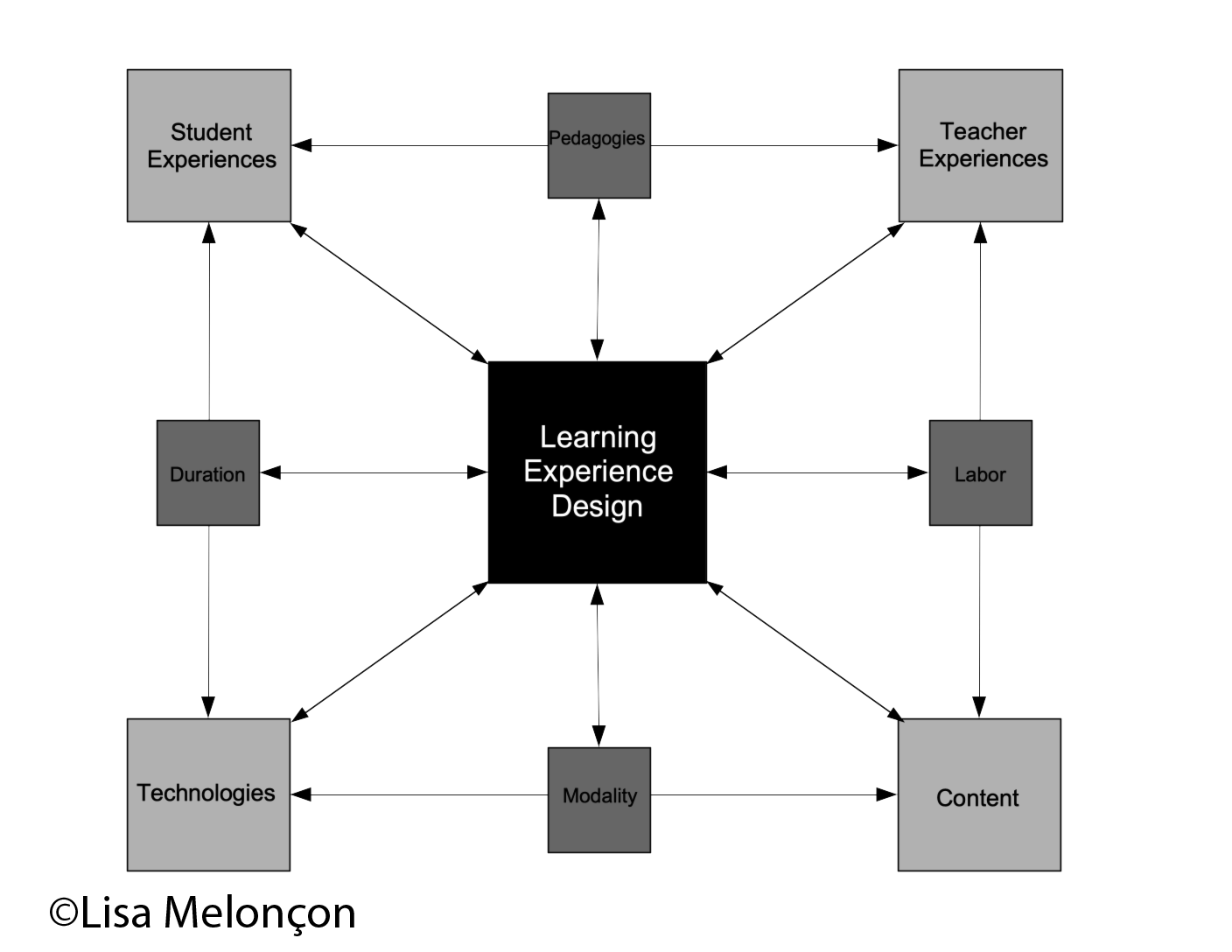
Figure 2 captures the key relational components that impact the learning experience design. Learning centered highlights the relationship between teacher, student, content, and course goals and is materialized in designing courses that attend to that dynamics found in that relationship. I want to make a clear distinction that learning centered as enacted in LXD is a relational learning event that involves multiple components. When considered together, LXD prioritizes learning via experiences and the what the learners need to learn. This critical self-awareness leads to being able to use programmatic inclusion effectively to make decisions that recognize oppression and moves toward inclusive practices within courses and programs. Equity minded practice can catalyze opportunities for transformation since LXD can attend to issues of identity, power, and values by its intentional focus on what students need and how that aligns to faculty expertise and experiences. It can also uncover institutional barriers and strengths within the departmental and institutional bureaucratic landscape, while highlighting the values that drive the curriculum.
The relational nature of LXD invokes Aoki’s situational praxis, which “praxis is oriented toward interest in mutual understanding, and also towards practical interest in securing authentically the always precarious intersubjectivity” (p. 122). Part of this intersubjectivity is recognizing and honoring student experiences. Laura Gonzales and Josephine Walwema (2022) aptly pointed out: “while it is true that academic institutions introduce learners to and expand their knowledge of the academy, it is also true that learners come to us with knowledges that they may deem unworthy of institutions, but which, in fact, offer crucial foundation for and entry points into what we have to teach them” (p. 81). Developing a curriculum development framework that opens up space for students to bring their whole selves into classrooms was a key aspect of what I was trying to think through. LXD’s emphasis on experience does exactly that. The remainder of this chapter offers an approach on how to use LXD in practice.

Figure 3 shows Garrett’s elements modified for LXD. One can see the relationship between the elements at the program and course level. The next two sections discuss the five elements of LXD from a program perspective and then from a course perspective. Tables 1 and 2 show key curricula questions for each element and then how to use the key question to guide program and course development.
Table 1: Program Elements of LXD building from Garrett, 2002, pp. 32-34.

Table 2: Course Elements of LXD building from Garrett, 2002, pp. 32-34.

Updating Garrett’s elements of UX, strategy, scope, structure, skeleton, and surface to enact aspects of LXD offers TPC a framework for curriculum development. Prioritizing experiences works to reposition learning to write as a more strategic, continual, collective practice (Pigg & Berger, 2020). One can think of a curriculum as a shared purpose, but without a process that shows that purpose to students, TPC PAs and faculty are risking making the degree less than it needs to be. Course and program design is a selfless task because the emphasis has to be on the students and their learning. LXD makes learning the main focus of programs, which should help to address the most important area of improvement for TPC programs. That is, the field has not done a good job of showing how all the pieces of a student’s learning goes together in an integrated and intentional way. LXD can drive that process because of the elements and the process of considering learning and experiences. LXD is a culturally responsive design approach because it puts a primacy on the experiences of students. But, to meet students where they are and invite them into the learning goals of the course (and program) requires a consistent in critical reflection and more so faculty buy-in into the goals of the course (and program). LXD as a framework for curriculum development also brings together the knowledge and skills at the program and course level while attending to programmatic inclusion.
Or in the words of Laurie Grobman and Christian Weisser, “we firmly believe an undergraduate writing major that combines the ethos of a liberal arts tradition with the practical skills needed by writings in workplace settings is both desirable and possible, but that it must be flexible enough to allow for ongoing curricular and contextual demands” (p. 192). Making more transparent the stance of the program and the multiple layers of goals and objectives is important to ensure that TPC programs are indeed working toward preparing students to enter the world of work but also enter into the world as educated citizens.